
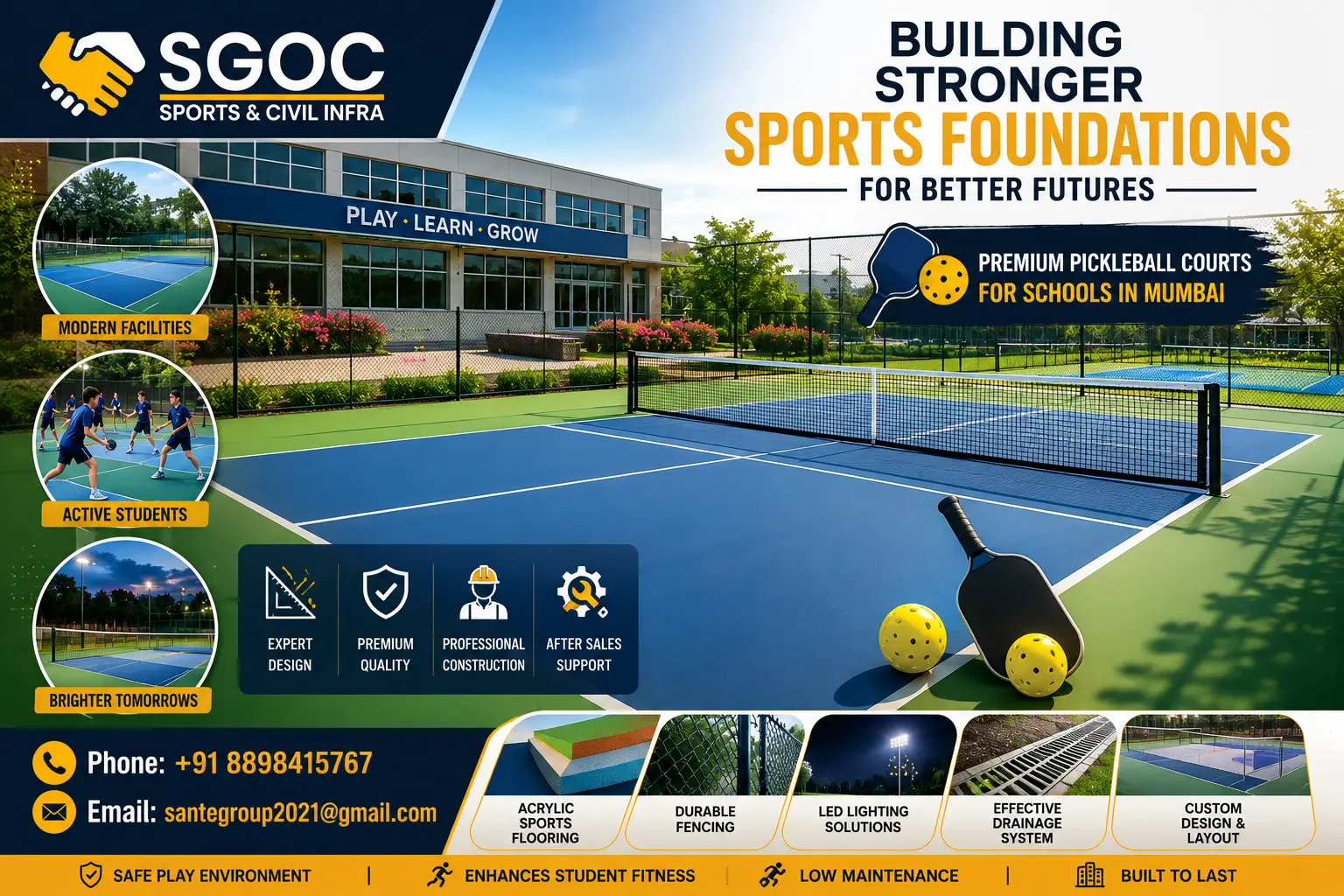
Pickleball is one of the fastest-growing sports in India, and schools are increasingly adding it to their sports programs. Combining elements of tennis, badminton, and table tennis, pickleball is easy to learn, suitable for students of different age groups, and promotes physical fitness, teamwork, and coordination. As schools continue to invest in modern sports facilities, building a pickleball court for schools has become a smart and future-ready decision.
A well-designed pickleball court encourages students to stay active while enhancing the overall sports infrastructure of the institution. Whether you are planning a new campus or upgrading an existing playground, understanding the process of school pickleball court construction is essential for achieving a durable, safe, and professional-quality court.
Why Schools Should Invest in a Pickleball Court
Adding a pickleball court offers numerous benefits for educational institutions. The game requires less space than a tennis court, making it ideal for schools with limited land. It is inclusive, allowing students of various ages and skill levels to participate comfortably.
Some of the major advantages include:
- Encourages daily physical activity and healthy lifestyles.
- Improves hand-eye coordination, balance, and agility.
- Promotes teamwork and sportsmanship.
- Requires relatively low maintenance compared to larger sports facilities.
- Supports physical education programs and inter-school competitions.
- Maximizes the use of available sports space.
As the popularity of pickleball continues to grow, schools equipped with modern facilities can provide students with more opportunities to develop athletic skills.
Planning a Pickleball Court for Schools
Proper planning is the foundation of a successful project. Before beginning construction, schools should evaluate the available space, budget, intended usage, and future expansion possibilities.
Key planning considerations include:
- Number of students who will use the court
- Indoor or outdoor installation
- Drainage requirements
- Safety zones around the court
- Lighting for evening practice
- Accessibility for all students
Working with experienced sports infrastructure professionals ensures that every aspect of the project is carefully planned.
Standard Pickleball Court Dimensions
Following standard dimensions ensures a professional playing experience.
Typical measurements include:
| Specification | Measurement |
|---|---|
| Court Size | 20 feet × 44 feet (6.10 m × 13.41 m) |
| Recommended Playing Area | Approximately 30 feet × 60 feet (9.14 m × 18.29 m) |
| Non-Volley Zone (Kitchen) | 7 feet (2.13 m) from the net on each side |
| Net Height at the Sidelines | 36 inches (0.91 m) |
| Net Height at the Center | 34 inches (0.86 m) |
Schools planning multiple courts should also include adequate spacing between courts to allow safe movement and spectator access.
Choosing the Right Location
Selecting the correct location significantly impacts the quality and lifespan of the court.
For outdoor courts, choose an area with:
- Excellent drainage
- Level ground
- Minimal obstruction from trees
- Good sunlight exposure
- Easy student access
Indoor courts require sufficient ceiling height, proper ventilation, and high-quality lighting to provide a comfortable playing environment throughout the year.
Selecting the Best Court Surface
Surface selection plays an important role in player safety, performance, and maintenance.
Acrylic Surface
Acrylic flooring is one of the most preferred options because it provides:
- Excellent grip
- Weather resistance
- Comfortable ball bounce
- Long service life
- Low maintenance
Concrete Base
A properly constructed reinforced concrete base provides structural stability and supports long-term durability.
Cushion Systems
Schools looking to improve comfort for younger players may consider cushioned acrylic systems that reduce impact on joints and enhance playing comfort.
Step-by-Step School Pickleball Court Construction
Step 1: Site Preparation
The construction process begins with clearing vegetation, removing debris, leveling the land, and preparing proper drainage systems.
Step 2: Base Construction
A strong concrete or asphalt foundation is installed to provide a stable surface capable of withstanding years of use.
Step 3: Surface Installation
After curing, multiple acrylic coating layers are applied to achieve durability, slip resistance, and consistent ball bounce.
Step 4: Court Marking
Professional court markings are painted according to international pickleball standards to ensure accurate gameplay.
Step 5: Net Installation
High-quality pickleball net systems are installed with appropriate tension and standard height.
Step 6: Fencing and Safety
Protective fencing helps keep balls within the playing area while improving player safety.
Step 7: Lighting
LED sports lighting enables evening practice sessions and tournaments while reducing energy consumption.
Essential Features for School Pickleball Courts
Schools should consider adding several features that improve safety and usability.
Recommended additions include:
- Anti-slip acrylic flooring
- LED floodlights
- Durable fencing
- Covered seating areas
- Drinking water facilities
- Scoreboards
- Equipment storage
- Wheelchair-accessible pathways
- Proper drainage systems
These features create a professional sports environment for students and coaching staff.
Maintenance Tips
Regular maintenance extends the life of the court and maintains playing quality.
Maintenance checklist:
- Clean leaves and dirt regularly.
- Inspect the surface for cracks.
- Wash the court periodically.
- Maintain proper drainage.
- Check net tension frequently.
- Repaint court lines when necessary.
- Inspect fencing and lighting systems.
Routine maintenance keeps repair costs low while ensuring student safety.
Cost Factors
Several factors influence the total cost of building a pickleball court for schools.
Major cost considerations include:
- Site preparation
- Foundation work
- Acrylic sports flooring
- Fencing installation
- Lighting systems
- Drainage infrastructure
- Sports equipment
- Seating arrangements
- Project location
- Number of courts
Although initial construction requires investment, the long-term benefits in student health, sports development, and campus value make it worthwhile.
Why Professional Construction Matters
Hiring experienced sports infrastructure specialists ensures that every stage of construction meets industry standards.
Professional contractors provide:
- Accurate court dimensions
- High-quality construction materials
- Proper drainage solutions
- Premium sports flooring
- Durable fencing
- Quality assurance
- Timely project completion
- Long-term maintenance support
A professionally built court minimizes future maintenance issues while delivering a safe and enjoyable playing experience.
Conclusion
Building a pickleball court for schools is an excellent investment that promotes physical fitness, encourages student participation in sports, and enhances campus infrastructure. From planning and site preparation to selecting the right flooring and installing professional equipment, every stage of school pickleball court construction requires careful attention to quality and safety. A well-designed court will serve students for many years while supporting physical education programs and competitive sporting events.
If your school is planning to build a modern pickleball facility in Mumbai, SGOC Infra is a trusted partner for end-to-end sports infrastructure solutions. Our team specializes in designing and constructing high-quality pickleball courts, multi-sport facilities, and sports flooring systems using premium materials and industry best practices. With extensive experience in delivering durable, safe, and performance-driven sports projects, SGOC Infra helps schools across Mumbai create world-class sports environments that inspire students to stay active and excel in athletics.
FAQ Section
1. What is the standard size of a pickleball court for schools?
A standard pickleball court measures 20 feet × 44 feet, with a recommended playing area of approximately 30 feet × 60 feet for safe movement.
2. How much does school pickleball court construction cost?
The cost depends on factors such as court size, acrylic flooring, drainage, fencing, lighting, and site preparation. Contact SGOC Infra for a customized quotation.
3. Which surface is best for a school pickleball court?
Acrylic sports flooring is the preferred choice because it offers excellent grip, durability, weather resistance, and low maintenance.
4. Can an existing badminton court be converted into a pickleball court?
Yes. Many schools convert existing badminton or tennis courts into pickleball courts with proper markings and surface modifications.
5. Why should schools invest in pickleball courts?
Pickleball improves students’ fitness, coordination, teamwork, and overall physical development while requiring less space than tennis courts.
6. Does SGOC Infra provide pickleball court construction in Mumbai?
Yes. SGOC Infra offers complete pickleball court construction services in Mumbai, including design, flooring, fencing, lighting, and turnkey sports infrastructure solutions.