
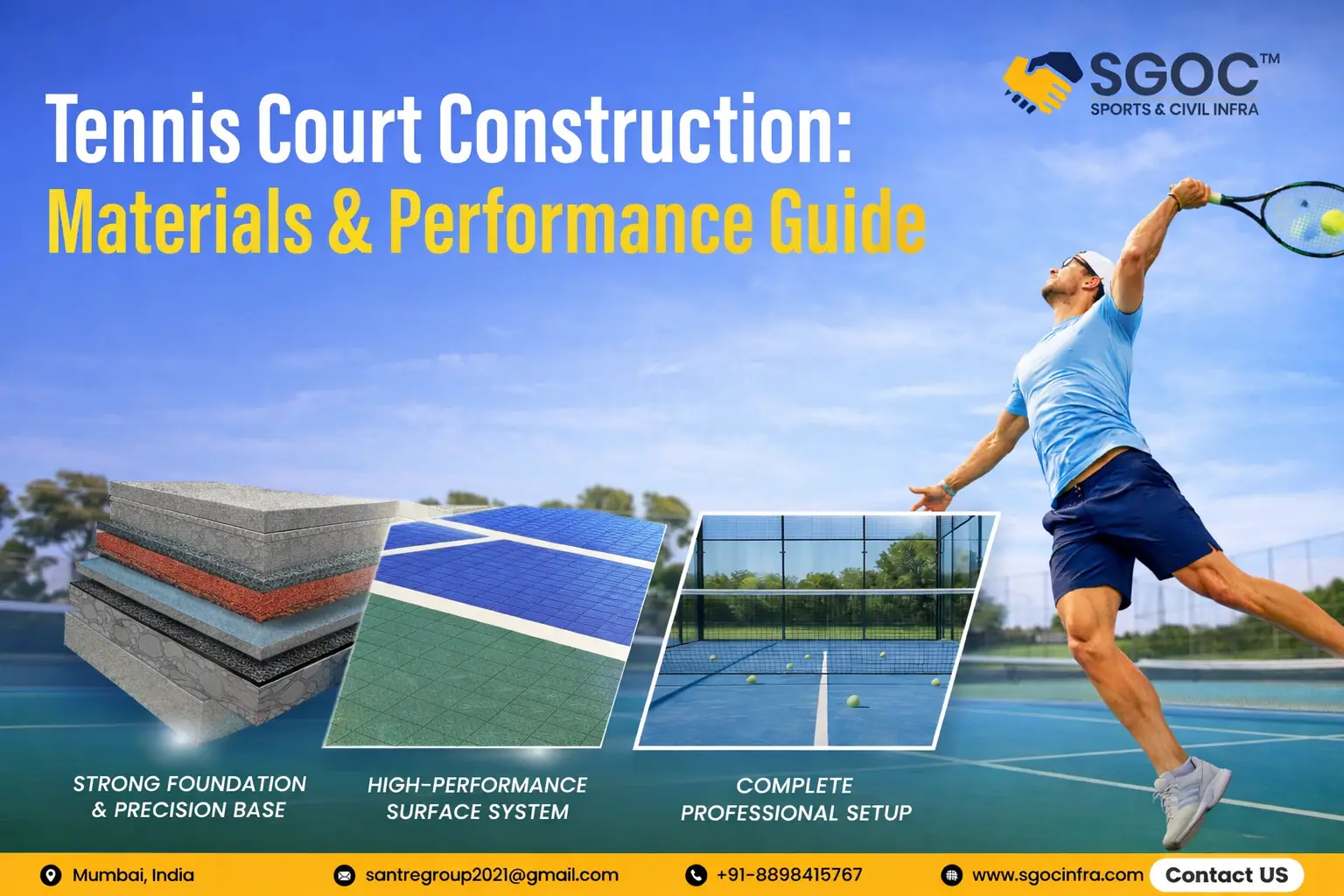
A professional Tennis Court Construction project goes far beyond laying a visible playing surface. Every high-quality Tennis Court is the result of careful planning, engineered layers, premium materials, and precise execution. From the base foundation to the final acrylic coating, each element plays a crucial role in durability, performance, and player safety.
At SGOC Sports & Civil Infra, courts are designed and constructed to meet professional standards, ensuring long-term performance and optimal playability.
Understanding Tennis Court Construction
Tennis court construction involves multiple layers, each contributing to the structural integrity and playing characteristics of the court. A well-built court ensures:
- Consistent ball bounce
- Player comfort and safety
- Resistance to weather conditions
- Low maintenance and long lifespan
Whether it’s for clubs, academies, or private use, investing in proper construction ensures the court remains “game-ready” for years.
Key Materials Used in Tennis Court Construction
1. Sub-Base Materials
The sub-base is the backbone of any tennis court. Typically made using compacted soil, crushed stone, or gravel, this layer ensures stability and proper drainage.
Importance:
- Prevents surface cracking
- Enhances load-bearing capacity
- Ensures water drainage
2. Base Layer (Concrete or Asphalt)
The base layer is usually constructed using either asphalt or concrete.
- Asphalt Courts: Flexible and cost-effective
- Concrete Courts: Durable and long-lasting
Why it matters:
A strong base layer ensures the court remains even and crack-resistant over time.
3. Acrylic Surface Coating
Acrylic coatings are widely used for modern tennis courts due to their performance benefits.
Features:
- Non-slip surface
- UV resistance
- Customisable colours
- Consistent ball bounce
This layer is essential in creating a professional-grade playing experience.
4. Cushion Layers (Optional)
For enhanced comfort, cushion layers are added between the base and the acrylic surface.
Benefits:
- Reduces impact on joints
- Minimises player fatigue
- Ideal for training and long matches
5. Line Marking Materials
High-quality line marking paints are used to ensure clear visibility and compliance with international standards.
Layers of a Professional Tennis Court
A well-engineered tennis court consists of the following layers:
- Compacted Subgrade
- Granular Sub-Base
- Base Layer (Concrete/Asphalt)
- Resurfacer Layer
- Acrylic Colour Coating
- Line Marking
Each layer is applied with precision to ensure optimal performance and durability.
Performance Factors in Tennis Court Construction
1. Surface Type
Different surfaces impact gameplay:
- Hard Courts (Acrylic): Fast-paced, consistent bounce
- Clay Courts: Slower, high bounce
- Grass Courts: Fastest, low bounce
Acrylic courts are the most popular due to their balance of speed and durability.
2. Drainage System
Proper drainage prevents water accumulation, which can damage the court and disrupt gameplay.
Key Features:
- Sloped surface design
- Permeable sub-base
- Efficient water runoff
3. Shock Absorption
Shock absorption is crucial for player comfort, especially for frequent use courts.
Cushioned acrylic systems help reduce injuries and improve playability.
4. Surface Evenness
A perfectly level surface ensures:
- Accurate ball bounce
- Fair gameplay
- Reduced wear and tear
5. Weather Resistance
Courts must withstand extreme weather conditions, especially in regions like Mumbai where humidity and rainfall are high.
High-quality coatings protect against:
- UV rays
- Rain damage
- Surface fading
Step-by-Step Tennis Court Construction Process
1. Site Preparation
- Land clearing and levelling
- Soil testing
- Layout marking
2. Sub-Base Installation
- Compaction of soil
- Installation of crushed stone layer
3. Base Construction
- Laying asphalt or concrete
- Ensuring proper curing
4. Surface Coating
- Application of primer
- Acrylic coating layers
- Texture finishing
5. Line Marking & Finishing
- Precision line marking
- Net installation
- Final inspection
Why Professional Construction Matters
Choosing experienced contractors like SGOC Sports & Civil Infra ensures:
- High-quality materials
- Expert workmanship
- Compliance with international standards
- Long-term cost savings
Poor construction can lead to cracks, uneven surfaces, and frequent repairs — increasing maintenance costs over time.
Maintenance Tips for Long-Lasting Tennis Courts
To maintain performance and durability:
- Clean the surface regularly
- Repair minor cracks immediately
- Reapply coatings when required
- Ensure proper drainage is functioning
Routine maintenance helps preserve the court’s quality and extends its lifespan.
Conclusion
A professional Tennis Court Construction project is a combination of engineering precision, quality materials, and expert execution. From the foundation to the final coating, every layer plays a vital role in ensuring durability, performance, and player satisfaction.
If you are planning to build a high-performance Tennis Court, partnering with experts like SGOC Sports & Civil Infra can make all the difference. With the right approach, you can create a court that is not only visually appealing but also built to deliver consistent, game-ready performance for years to come.
Read Also Blog:
Sports Infrastructure Company in Mumbai
Sports Equipment Suppliers in India | SGOC Infrastructure Mumbai
How to Choose the Best Awards Trophies Supplier for Your Event