
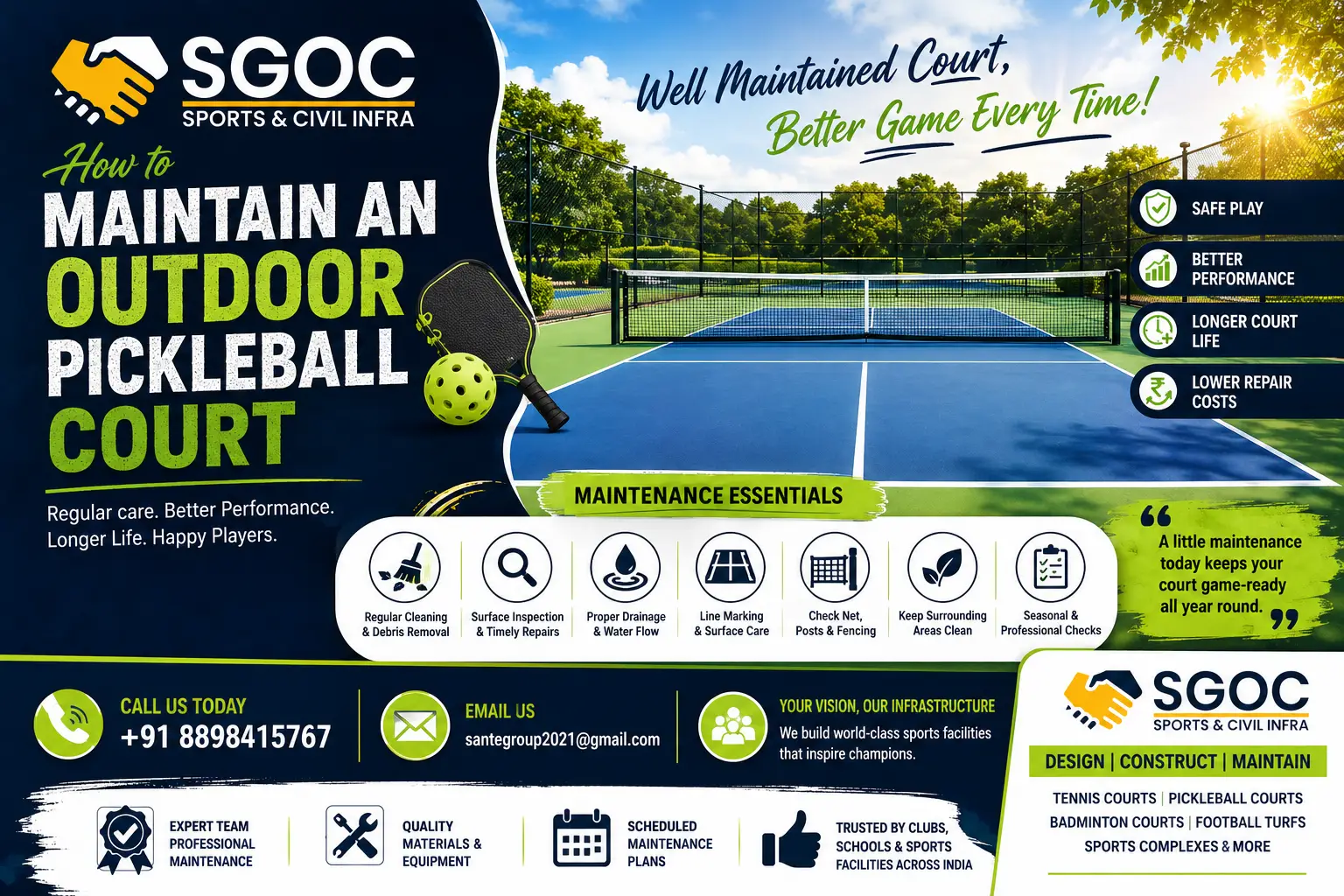
An outdoor pickleball court is a valuable sports facility for clubs, academies, schools, residential societies, hotels, and recreational spaces. However, regular maintenance is essential to keep the court safe, attractive, and suitable for consistent play. Exposure to sunlight, rain, dust, moisture, leaves, and changing temperatures can gradually affect the playing surface, lines, drainage, fencing, and other components.
Whether you have recently constructed a pickleball court or have been operating one for several years, a proper maintenance routine can help protect your investment and reduce the need for expensive repairs.
Why Is Pickleball Court Maintenance Important?
Outdoor pickleball courts are continuously exposed to environmental conditions. Dust and leaves can accumulate on the surface, while rainwater and moisture may contribute to algae or surface deterioration. Prolonged exposure to strong sunlight can also cause colours to fade over time.
Regular maintenance helps:
- Keep the playing surface clean and safe
- Reduce the risk of slips and falls
- Protect the court from premature surface damage
- Maintain clear and visible court lines
- Prevent drainage problems
- Extend the life of the court surface
- Keep the facility looking professional
A well-maintained court also provides players with a more consistent playing experience.
1. Clean the Court Regularly
Routine cleaning should be the first step in your pickleball court maintenance program. Remove leaves, dust, dirt, twigs, and other debris before they accumulate.
Use a soft-bristle broom, suitable court sweeper, or leaf blower to clean the playing area. Avoid dragging heavy or sharp objects across the surface because they may damage the coating.
For stains or dirt that cannot be removed through dry cleaning, use cleaning methods and products appropriate for the specific court surface. Aggressive chemicals or unsuitable equipment can damage acrylic and other sports surfaces.
2. Check for Cracks and Surface Damage
Inspect the court regularly for cracks, peeling, bubbling, uneven areas, or other signs of surface deterioration.
Small cracks should not be ignored. Water can enter through damaged areas and gradually worsen the problem, particularly during periods of heavy rain. Early inspection allows facility owners to address minor problems before they become more expensive repairs.
If you notice significant cracking or surface lifting, consult a professional sports infrastructure contractor to identify the underlying cause and recommend the appropriate repair.
3. Keep the Drainage System Clear
Proper drainage is one of the most important aspects of outdoor pickleball court maintenance. Standing water can damage the surface and create unsafe playing conditions.
Check perimeter drains, channels, outlets, and surrounding areas regularly. Remove leaves, mud, dirt, and other materials that could block the flow of water.
Drainage should receive particular attention before and after the monsoon season. A properly designed court drainage system helps rainwater leave the playing area efficiently and reduces prolonged water exposure.
4. Maintain Court Lines
Clearly visible lines are essential for accurate gameplay. Over time, court markings may become faded because of weather, regular play, cleaning, and sunlight exposure.
Inspect the lines periodically and arrange for professional repainting or remarking when necessary. Use suitable sports-court marking materials to maintain clean, durable, and clearly visible lines.
Avoid painting over damaged surfaces without first addressing the underlying issue.
5. Inspect the Pickleball Net and Posts
The net is another important component that requires regular attention. Check the net for tears, excessive wear, or loose sections.
The posts should also be inspected for movement, corrosion, or damage. Make sure the net remains properly positioned and maintained according to the requirements of the facility.
A simple inspection every few weeks can help identify problems before they affect players.
6. Maintain Fencing and Surrounding Areas
Outdoor pickleball courts commonly use fencing to keep balls within the playing area and provide separation from surrounding spaces.
Inspect fencing for loose sections, damaged mesh, rust, broken fittings, or unstable posts. Trim vegetation around the court and make sure trees, bushes, or other landscaping do not allow excessive leaves and debris to fall onto the playing surface.
Keeping the surrounding area clean can significantly reduce the amount of maintenance required on the court itself.
7. Prepare the Court for the Monsoon
In India, monsoon conditions can create additional maintenance challenges for outdoor sports facilities. Before the rainy season, clean all drainage channels and inspect the court for cracks, low spots, and damaged areas.
After periods of heavy rain, check whether water is collecting anywhere on the surface. Persistent standing water should be investigated because it may indicate a drainage or surface-level problem.
Regular pre-monsoon and post-monsoon inspections can help protect an outdoor pickleball court from avoidable damage.
8. Protect the Surface from Unnecessary Damage
Players and visitors should follow basic court-use guidelines. Avoid bringing glass containers, sharp equipment, food, or other objects that could damage the playing surface.
Furniture, temporary structures, and heavy equipment should not be dragged across the court. If maintenance equipment needs to be brought onto the court, make sure it is suitable for sports surfaces.
Simple usage rules can significantly reduce unnecessary wear.
9. Schedule Professional Inspections
Daily cleaning and routine checks are useful, but professional inspections are also recommended. A qualified sports infrastructure company can assess the condition of the surface, drainage, fencing, lighting, net system, and other components.
Professional maintenance becomes particularly important when the court shows visible cracks, fading, drainage issues, surface peeling, or uneven areas.
For larger facilities such as sports academies, clubs, schools, and residential communities, maintaining a written inspection and maintenance schedule can make it easier to track repairs and recurring issues.
How Often Should an Outdoor Pickleball Court Be Maintained?
The frequency depends on usage, weather, court surface, and surrounding environment. As a general approach:
- Daily or after heavy use: Remove leaves, dust, and debris.
- Weekly: Inspect the surface, net, fencing, and surrounding area.
- Monthly: Check drainage, court markings, posts, and visible surface defects.
- Before monsoon: Clean drainage systems and inspect cracks and surface damage.
- After monsoon: Check for water-related damage, algae, cracks, and surface deterioration.
- Periodically: Arrange professional inspection and resurfacing assessment when required.
The exact maintenance schedule should be adjusted according to the court’s condition and level of use.
Final Thoughts
Maintaining an outdoor pickleball court is not simply about keeping it clean. Regular cleaning, surface inspections, drainage maintenance, line care, net inspection, fencing checks, and seasonal preparation all contribute to a safer and longer-lasting sports facility.
For schools, clubs, residential societies, academies, hotels, and commercial sports facilities, professional planning and ongoing maintenance can help protect the investment made in the court.
SGOC Infrastructure provides sports infrastructure solutions for pickleball, tennis, badminton, football, and other sports facilities, including design, flooring, lighting, and maintenance support.
FAQs
1. How do you maintain an outdoor pickleball court?
Regularly remove dirt and debris, inspect the surface for cracks, keep drainage systems clear, maintain court lines, and check the net, posts, and fencing. Professional inspections should also be scheduled periodically.
2. How often should an outdoor pickleball court be cleaned?
Light cleaning should be done regularly, especially after heavy use or windy weather. A deeper inspection and cleaning routine can be performed weekly or monthly depending on court usage and environmental conditions.
3. How do you protect a pickleball court during monsoon?
Before the monsoon, clean drainage channels, inspect cracks, remove debris, and check for low areas where water could collect. After heavy rain, inspect the surface for standing water and signs of damage.
4. How often should a pickleball court be resurfaced?
Resurfacing depends on factors such as court usage, weather exposure, surface quality, and maintenance. A professional inspection can determine when resurfacing is necessary.
5. What causes cracks in an outdoor pickleball court?
Cracks can result from ground movement, temperature changes, moisture, poor drainage, ageing surfaces, or underlying construction problems. Early repairs can help prevent further deterioration.
Planning a New Pickleball Court or Need Maintenance Support?
SGOC Infrastructure provides professional sports infrastructure solutions for pickleball courts, tennis courts, badminton courts, football turfs, and other sports facilities. For project consultation and infrastructure requirements:
Phone: +91 8898415767
Email: santegroup2021@gmail.com