
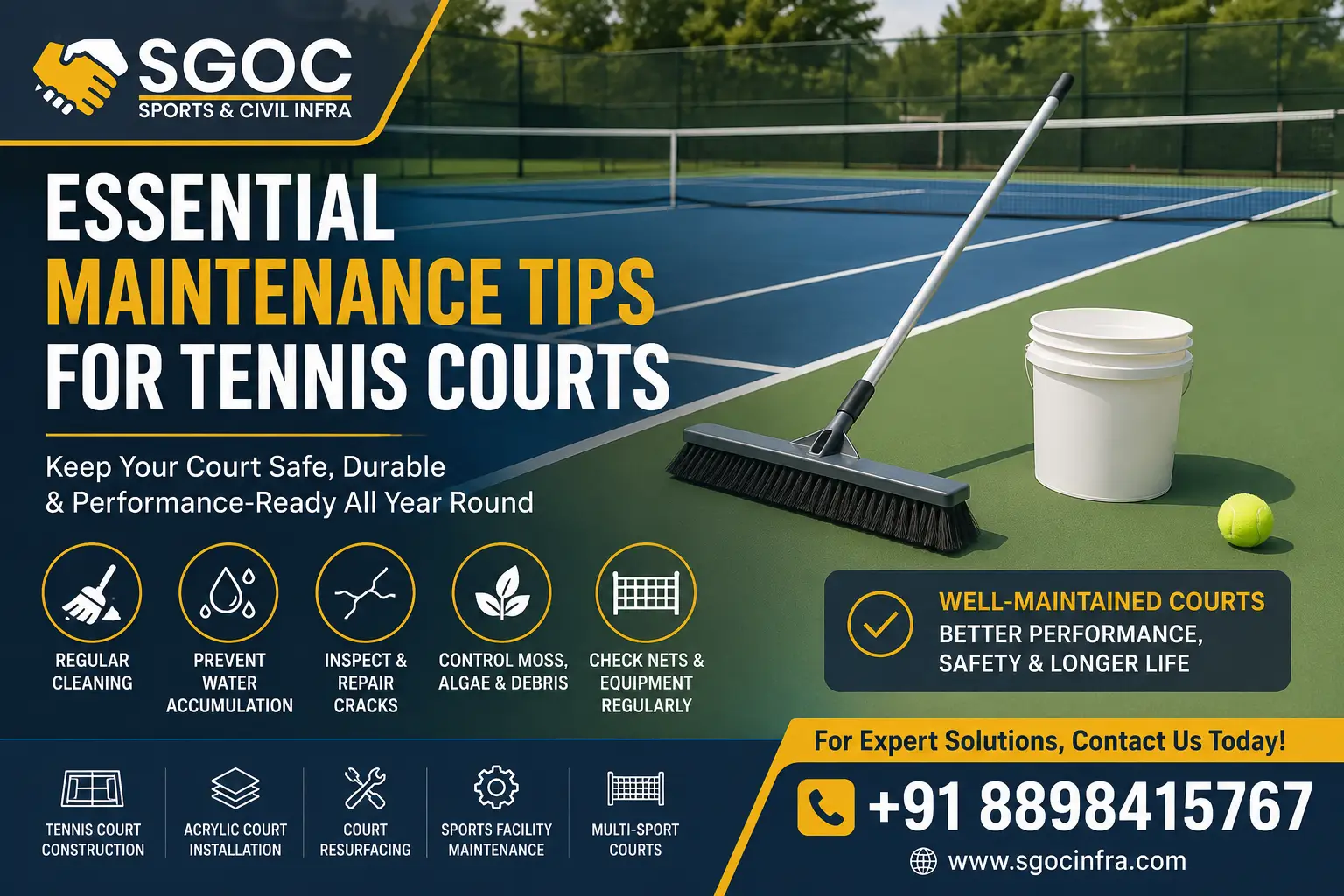
A professionally constructed tennis court is a valuable investment for schools, sports academies, clubs, residential communities, and commercial sports facilities. However, even the highest-quality tennis court requires regular maintenance to preserve its appearance, performance, and durability. Proper maintenance not only extends the life of the court but also ensures a safe and enjoyable playing experience for athletes.
Whether you own an acrylic tennis court, synthetic tennis court, or hard court, following a structured maintenance routine can significantly reduce long-term repair costs and keep your facility in excellent condition.
At SGOC Infra, we specialize in tennis court construction, sports infrastructure development, and professional sports flooring solutions.. In this guide, we’ll explain the essential maintenance practices every tennis court owner should follow.
Why Tennis Court Maintenance Matters
Many facility owners focus only on court construction and overlook regular maintenance. This often results in:
- Surface cracks
- Water accumulation
- Faded playing lines
- Moss and algae growth
- Uneven ball bounce
- Reduced player safety
Routine maintenance helps identify small issues before they become expensive repairs. Regular cleaning, inspections, and timely resurfacing can extend the life of a tennis court by many years while maintaining consistent playing conditions.
1. Remove Dust, Leaves, and Debris Regularly
One of the simplest yet most effective maintenance practices is keeping the court clean.
Leaves, dirt, branches, and dust trap moisture, encouraging algae and moss growth while making the playing surface slippery.
Best Practice
- Sweep the court daily or several times a week.
- Use a soft broom or leaf blower.
- Remove standing leaves after rain.
- Avoid metal tools that may scratch acrylic coatings.
A clean surface improves player safety and enhances the overall appearance of your sports facility.
2. Prevent Water Accumulation
Water is one of the biggest enemies of any outdoor tennis court.
Standing water gradually weakens the surface layers and may lead to:
- Surface peeling
- Cracks
- Base damage
- Algae formation
After heavy rainfall:
- Remove water quickly using a rubber squeegee.
- Check drainage systems.
- Inspect nearby gutters and outlets.
If puddles repeatedly appear in the same location, professional leveling may be required. Persistent standing water is a common early warning sign of underlying surface issues.
3. Inspect Surface Cracks Frequently
Small cracks may seem harmless, but they expand over time because of:
- Temperature changes
- Rainwater penetration
- Heavy usage
- Ground movement
Inspect your court every month.
Look for:
- Hairline cracks
- Surface peeling
- Color fading
- Loose coatings
Repairing minor cracks early prevents expensive resurfacing later.
4. Keep Court Lines Visible
Court markings are essential for professional gameplay.
Over time, UV rays and continuous play fade the painted lines.
Inspect line visibility regularly and repaint them whenever required.
High-quality acrylic coatings maintain brighter colors and improve visibility during matches.
5. Control Moss, Algae, and Weed Growth
Outdoor tennis courts are exposed to moisture, humidity, and surrounding vegetation.
Without regular cleaning, algae and moss make the surface slippery.
To prevent biological growth:
- Trim nearby trees
- Remove fallen leaves
- Improve sunlight exposure
- Clean the surface using approved court-cleaning solutions
- Never allow weeds to grow along court edges
Maintaining proper drainage and keeping the court free from organic debris helps reduce algae growth significantly.
6. Maintain Tennis Nets and Accessories
A tennis court is more than just its playing surface.
Regularly inspect:
- Net tension
- Net posts
- Center straps
- Fence panels
- Gates
- Lighting poles
- Benches
Replace worn-out accessories before they affect gameplay.
Properly maintained equipment also improves the professional appearance of your facility.
7. Restrict Improper Footwear and Equipment
Many tennis court surfaces become damaged because users wear incorrect footwear.
Avoid:
- High heels
- Metal spikes
- Heavy machinery
- Sharp equipment
- Motorized vehicles
Encourage players to use non-marking tennis shoes designed specifically for court sports.
Simple facility rules can significantly increase court life.
8. Follow a Seasonal Maintenance Schedule
Every season presents different maintenance challenges.
Summer
- Wash away accumulated dust.
- Check for UV-related fading.
- Inspect expansion cracks.
Monsoon
- Monitor drainage.
- Remove standing water immediately.
- Clean moss-prone areas frequently.
Winter
- Inspect surface coatings.
- Repair minor cracks before they expand.
- Clean accumulated debris.
Seasonal inspections help maintain consistent court performance throughout the year.
9. Schedule Professional Court Inspections
While routine cleaning can be managed by facility staff, professional inspections are equally important.
Experts evaluate:
- Surface condition
- Base stability
- Drainage efficiency
- Acrylic coating wear
- Fence integrity
- Lighting systems
Professional maintenance helps detect hidden issues before they become major structural problems.
10. Resurface the Court When Necessary
Even with excellent maintenance, every tennis court eventually requires resurfacing.
Common signs include:
- Extensive cracking
- Worn-out coatings
- Poor ball bounce
- Surface discoloration
- Slippery playing conditions
Professional resurfacing restores:
- Court appearance
- Player comfort
- Shock absorption
- Surface grip
- Ball performance
Delaying resurfacing often increases repair costs and reduces player satisfaction.
Maintenance Checklist
| Frequency | Maintenance Task |
|---|---|
| Daily | Remove leaves, dust, and debris |
| Weekly | Sweep, inspect nets, clean surface |
| Monthly | Check cracks, drainage, fencing, and line markings |
| Quarterly | Deep cleaning and equipment inspection |
| Annually | Professional inspection and preventive repairs |
| Every Few Years | Court resurfacing (depending on usage and condition) |
Why Choose SGOC Infra?
At SGOC Infra, we deliver end-to-end sports infrastructure solutions tailored to Indian weather conditions and international quality standards.
Our services include:
- Tennis Court Construction
- Acrylic Tennis Court Installation
- Sports Flooring Solutions
- Multi-Sport Court Construction
- Pickleball Court Development
- Basketball Court Construction
- Football Turf Installation
- Cricket Pitch Construction
- Sports Facility Maintenance
Our experienced team focuses on durable construction, precision engineering, premium materials, and long-term maintenance support, ensuring every sports facility performs at its best.
Final Thoughts
A tennis court is a long-term investment that deserves consistent care. Regular cleaning, timely inspections, proper drainage management, and preventive maintenance not only enhance player safety but also maximize the lifespan of the facility. By addressing small issues before they become major problems, court owners can significantly reduce repair expenses while maintaining professional playing conditions. Whether you manage a school, sports academy, club, residential complex, or commercial sports facility, following these essential maintenance tips will keep your tennis court in top condition throughout the year.
If you’re planning to build a new tennis court or need expert maintenance and resurfacing services, SGOC Infra is your trusted partner for world-class sports infrastructure solutions across India.