
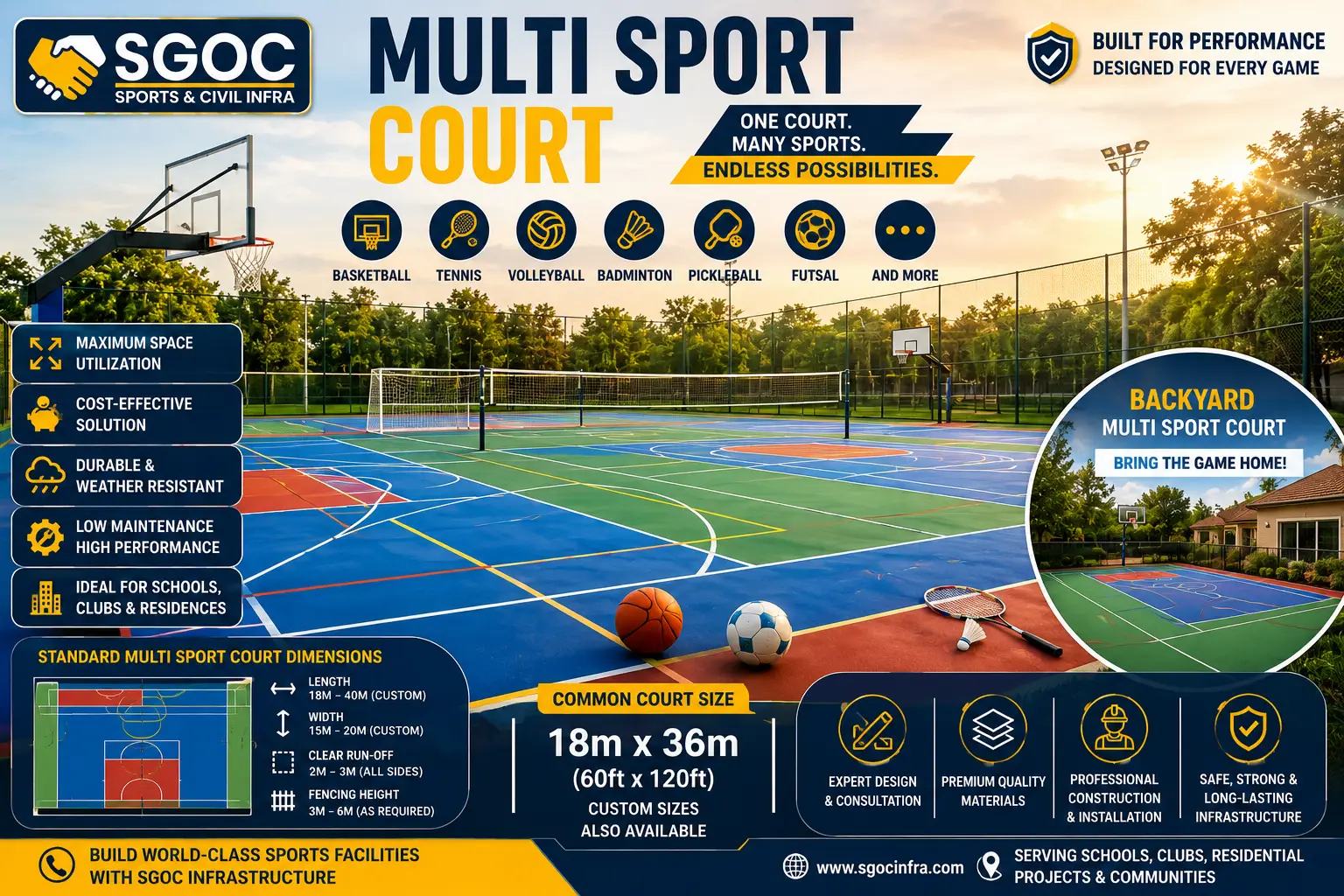
Modern sports facilities are evolving to maximize space, improve versatility, and support a variety of athletic activities. One of the most efficient solutions is a multi sport court, a specially designed playing surface that allows multiple sports to be played on a single court. Whether for schools, residential communities, sports academies, parks, commercial spaces, or private homes, multi-sport courts provide exceptional value by combining functionality with cost-effectiveness.
As the demand for recreational and professional sports infrastructure continues to grow, organizations are investing in courts that can accommodate basketball, tennis, badminton, volleyball, futsal, pickleball, and other sports without requiring separate facilities. A well-designed multi-sport court not only saves space but also encourages greater participation in sports and physical fitness.
What Is a Multi Sport Court?
A multi sport court is a specially engineered sports surface that supports two or more games on a single playing area. Instead of constructing separate courts for different sports, multiple line markings, adjustable equipment, and durable flooring systems allow the same space to be used for various activities.
For example, one court may be designed for:
- Basketball
- Tennis
- Badminton
- Volleyball
- Pickleball
- Futsal
- Handball
- Netball
- Mini Football
This flexibility makes multi-sport courts an excellent investment for schools, colleges, sports clubs, housing societies, corporate campuses, and recreational parks.
Why Multi Sport Courts Are Becoming Popular
The increasing popularity of multi-sport courts is driven by their ability to maximize available space while reducing construction and maintenance costs.
Some key reasons include:
- Efficient use of land
- Lower construction costs compared to building separate courts
- Increased participation in different sports
- Suitable for all age groups
- Easy maintenance
- Higher return on investment
- Attractive addition to schools and residential projects
As communities focus more on health, wellness, and active lifestyles, multi-sport courts provide an ideal solution for year-round recreational activities.
Benefits of a Multi Sport Court
1. Maximum Space Utilization
Many schools and residential projects have limited land available for sports facilities. A multi-sport court allows several sports to share one professionally designed playing surface, making the most of available space.
2. Cost-Effective Investment
Instead of constructing separate tennis, basketball, volleyball, and badminton courts, one multi-purpose court significantly reduces:
- Land development costs
- Flooring expenses
- Lighting installation
- Fencing costs
- Maintenance expenses
This makes it a practical long-term investment.
3. Encourages More Physical Activity
Offering multiple sports on a single court encourages children and adults to stay active. Players can switch between games without changing locations, making sports more enjoyable and accessible.
4. Flexible for Different Users
A multi-sport court can accommodate:
- Schools
- Colleges
- Universities
- Sports academies
- Housing societies
- Resorts
- Corporate offices
- Public parks
- Government sports complexes
Its versatility ensures that users of different ages and skill levels can enjoy a variety of sports.
5. Low Maintenance Requirements
Modern acrylic and synthetic sports flooring systems are designed for durability and require minimal maintenance. Regular cleaning and periodic inspections help keep the court in excellent condition for years.
Multi Sport Court Design
A successful multi sport court design begins with careful planning to ensure the playing surface meets the requirements of multiple sports while maintaining safety and performance.
Key design considerations include:
Surface Selection
Popular surface options include:
- Acrylic sports flooring
- PU (Polyurethane) flooring
- Modular sports tiles
- Synthetic turf (for selected sports)
The choice depends on the sports to be played, climate conditions, and maintenance preferences.
Court Markings
Different colored lines are typically used to distinguish between sports. For example:
- White for basketball
- Yellow for badminton
- Blue for volleyball
- Red for pickleball
Clear markings help players identify the correct boundaries for each game without confusion.
Adjustable Sports Equipment
Modern multi-sport courts often include:
- Adjustable basketball hoops
- Removable volleyball poles
- Portable badminton posts
- Multi-use net systems
This flexibility allows the court to transition quickly between sports.
Lighting
LED sports lighting ensures excellent visibility for evening games while improving energy efficiency and reducing operational costs.
Drainage
Proper drainage prevents water accumulation and extends the life of the sports surface. This is especially important for outdoor installations.
Multi Purpose Sports Court Dimensions
One of the most common questions is about multi purpose sports court dimensions.
Unlike dedicated courts, multi-sport courts can be customized based on available space and the sports to be included.
Here are some commonly used dimensions:
| Court Type | Approximate Dimensions |
|---|---|
| Small Community Court | 15 m × 28 m |
| Standard Multi Sport Court | 18 m × 36 m |
| School Multi Sport Court | 20 m × 40 m |
| Professional Multi Sport Court | Customized according to sports |
The exact dimensions depend on the combination of sports and applicable standards. During the planning stage, designers ensure that the layout provides sufficient playing area, safety clearances, and appropriate line markings for each sport.
Multi Sport Court Dimensions for Popular Sports
When designing a multi-sport facility, the following sports dimensions are commonly considered:
| Sport | Standard Playing Area |
|---|---|
| Basketball | 28 m × 15 m |
| Tennis | 23.77 m × 10.97 m |
| Volleyball | 18 m × 9 m |
| Badminton | 13.4 m × 6.1 m |
| Pickleball | 13.41 m × 6.10 m |
These measurements help determine the overall court layout and ensure compatibility with the selected sports.
Backyard Multi Sport Court
A backyard multi sport court is becoming increasingly popular among homeowners who want to create a private recreational space for family and friends.
Even with limited outdoor space, a professionally designed backyard court can accommodate activities such as:
- Basketball
- Pickleball
- Badminton
- Mini Tennis
- Volleyball
- Children’s games
Backyard courts are ideal for promoting an active lifestyle while increasing the functionality and value of residential properties.
Many homeowners choose acrylic or modular tile surfaces because they offer durability, weather resistance, and easy maintenance.
Why Invest in a Backyard Multi Sport Court?
A backyard court provides a convenient way for families to stay active without leaving home. It creates a dedicated space for recreation, encourages children to spend more time outdoors, and supports regular physical activity for all age groups. It also serves as an attractive feature that can enhance the overall appeal and value of a property.
Best Flooring Options for a Multi Sport Court
Selecting the right flooring is one of the most important decisions when building a multi sport court. The surface directly affects player safety, game performance, durability, and maintenance costs.
1. Acrylic Sports Flooring
Acrylic flooring is one of the most popular choices for outdoor multi-purpose courts.
Benefits:
- UV-resistant and weatherproof
- Slip-resistant surface
- Excellent ball bounce
- Low maintenance
- Long service life
- Ideal for basketball, tennis, pickleball, volleyball, and badminton
This flooring is widely used in schools, sports academies, clubs, and residential communities.
2. Polyurethane (PU) Flooring
PU flooring provides superior cushioning and shock absorption, making it suitable for high-performance sports facilities.
Advantages:
- Comfortable playing surface
- Reduces stress on joints
- Excellent durability
- Professional appearance
3. Modular Sports Tiles
Modular interlocking tiles are an excellent option for both indoor and outdoor installations.
Advantages:
- Easy installation
- Fast drainage
- Replace individual damaged tiles
- Available in multiple colors
- Minimal maintenance
These are commonly used for backyard multi sport courts and community recreation areas.
4. Synthetic Turf
Synthetic turf is suitable for sports such as mini football, hockey training, and recreational activities.
It provides:
- Natural grass appearance
- Excellent drainage
- Soft playing surface
- Reduced maintenance compared to natural grass
How to Design the Perfect Multi Sport Court
An effective multi sport court design should balance functionality, safety, and aesthetics. Every project should begin with a detailed site assessment to determine available space, intended sports, and user requirements.
Site Planning
A proper site evaluation includes:
- Ground conditions
- Drainage planning
- Available space
- Sunlight direction
- Accessibility
- Future expansion possibilities
Court Layout
The layout should allow multiple sports to coexist without creating confusion. Different colored line markings help distinguish between various playing areas while maintaining a clean appearance.
Safety Features
Every multi-sport facility should include:
- Safety fencing
- Anti-slip surface
- Rounded corners where applicable
- Protective padding around poles
- Adequate lighting
- Proper drainage systems
Additional Accessories
To improve functionality, consider installing:
- Adjustable basketball hoops
- Portable volleyball posts
- Removable badminton poles
- Seating areas
- Drinking water stations
- Player benches
- LED floodlights
- Scoreboards
Multi Sport Court Construction Process
Building a durable sports court involves several carefully planned stages.
Step 1: Site Survey
The project begins with evaluating the land, soil conditions, and available space.
Step 2: Ground Preparation
The site is excavated, leveled, and compacted to create a stable foundation.
Step 3: Base Construction
A strong sub-base using crushed stone or concrete provides long-term structural stability.
Step 4: Surface Installation
The selected sports flooring is installed according to manufacturer specifications.
Step 5: Court Marking
Professional line markings are applied using durable, weather-resistant paint. Each sport is identified with a different color for clarity.
Step 6: Equipment Installation
Sports equipment such as basketball hoops, tennis posts, volleyball poles, and fencing are installed.
Step 7: Final Inspection
The completed court is inspected to ensure it meets safety, quality, and performance standards before handover.
Factors That Affect Multi Sport Court Construction Cost
The total cost of a multi-sport court depends on several factors, including:
- Court size
- Surface material
- Number of sports included
- Drainage requirements
- Lighting system
- Fencing height
- Sports equipment
- Seating arrangements
- Location of the project
- Ground preparation requirements
Investing in high-quality materials may have a higher upfront cost but often results in lower maintenance expenses and a longer service life.
Multi Sport Court Maintenance Tips
Regular maintenance helps preserve the court’s appearance and performance.
Daily Maintenance
- Sweep dust and debris.
- Remove leaves and standing water.
- Inspect nets and equipment.
Monthly Maintenance
- Clean the playing surface.
- Check court markings.
- Inspect drainage outlets.
- Tighten bolts on sports equipment.
Annual Maintenance
- Repair minor cracks.
- Repaint faded line markings.
- Inspect fencing and lighting.
- Evaluate the condition of the surface coating.
A well-maintained court can provide reliable performance for many years.
Common Mistakes to Avoid
Avoid these common errors when planning a multi-sport court:
- Choosing incorrect court dimensions.
- Ignoring proper drainage.
- Using low-quality flooring materials.
- Installing inadequate lighting.
- Overlapping court markings without proper planning.
- Failing to provide sufficient safety clearance.
- Neglecting regular maintenance.
Working with experienced sports infrastructure professionals helps ensure the project is completed to a high standard.
Why Choose SGOC Infrastructure?
Building a high-quality multi sport court requires technical expertise, careful planning, and premium materials. SGOC Infrastructure specializes in designing and constructing sports facilities that meet international standards while addressing the unique needs of schools, colleges, sports academies, residential communities, corporate campuses, and public spaces.
From initial planning and site preparation to flooring installation, court marking, fencing, lighting, and equipment setup, SGOC Infrastructure delivers complete turnkey sports infrastructure solutions. Every project focuses on durability, player safety, and long-term performance, ensuring clients receive a facility that supports multiple sports and years of reliable use.
Frequently Asked Questions
1. What is a multi sport court?
A multi sport court is a single playing surface designed to accommodate multiple sports such as basketball, tennis, volleyball, badminton, and pickleball through specialized line markings and equipment.
2. What are the standard multi purpose sports court dimensions?
The dimensions vary depending on the sports included. A common size ranges from 18 m × 36 m to 20 m × 40 m, although custom layouts are also widely used.
3. Can I build a backyard multi sport court?
Yes. A backyard multi sport court can be customized to fit available space and is ideal for basketball, pickleball, badminton, mini tennis, and other recreational activities.
4. Which flooring is best for a multi sport court?
Acrylic sports flooring, polyurethane flooring, and modular sports tiles are among the most popular options because they offer durability, player comfort, and low maintenance.
5. How long does it take to build a multi sport court?
The construction timeline depends on the project size, site conditions, and flooring system, but most projects are completed within a few weeks after site preparation.
6. How often should a multi sport court be maintained?
Basic cleaning should be performed regularly, with detailed inspections and preventive maintenance carried out periodically to maximize the court’s lifespan.
7. What sports can be played on a multi sport court?
Depending on the design, a multi-sport court can support basketball, tennis, badminton, volleyball, pickleball, futsal, netball, and other recreational games.
8. Is a multi sport court a good investment?
Yes. It maximizes land use, reduces construction costs compared to separate courts, encourages greater sports participation, and offers long-term value for schools, clubs, residential communities, and commercial facilities.
Conclusion
A multi sport court is a smart, space-efficient solution for organizations and homeowners looking to support a variety of sports within a single facility. With thoughtful multi sport court design, appropriate multi purpose sports court dimensions, and high-quality flooring, these courts deliver outstanding performance, safety, and long-term durability. Whether you’re planning a backyard multi sport court or a large sports complex, investing in professional design and construction ensures the best results.
SGOC Infrastructure provides end-to-end sports infrastructure solutions, from planning and design to construction and installation. With a focus on quality, innovation, and compliance with international standards, SGOC Infrastructure helps clients create modern multi-sport facilities that inspire active lifestyles and deliver lasting value.